Our projects

Three projects, two countries

An operating teak and coffee base in South Sudan, and a restoration and carbon growth engine in Uganda.

South SudanOperating89% owned

Equatoria Teak Company

Our anchor operating base: proven teak and a revived coffee origin in Nzara County, Western Equatoria.

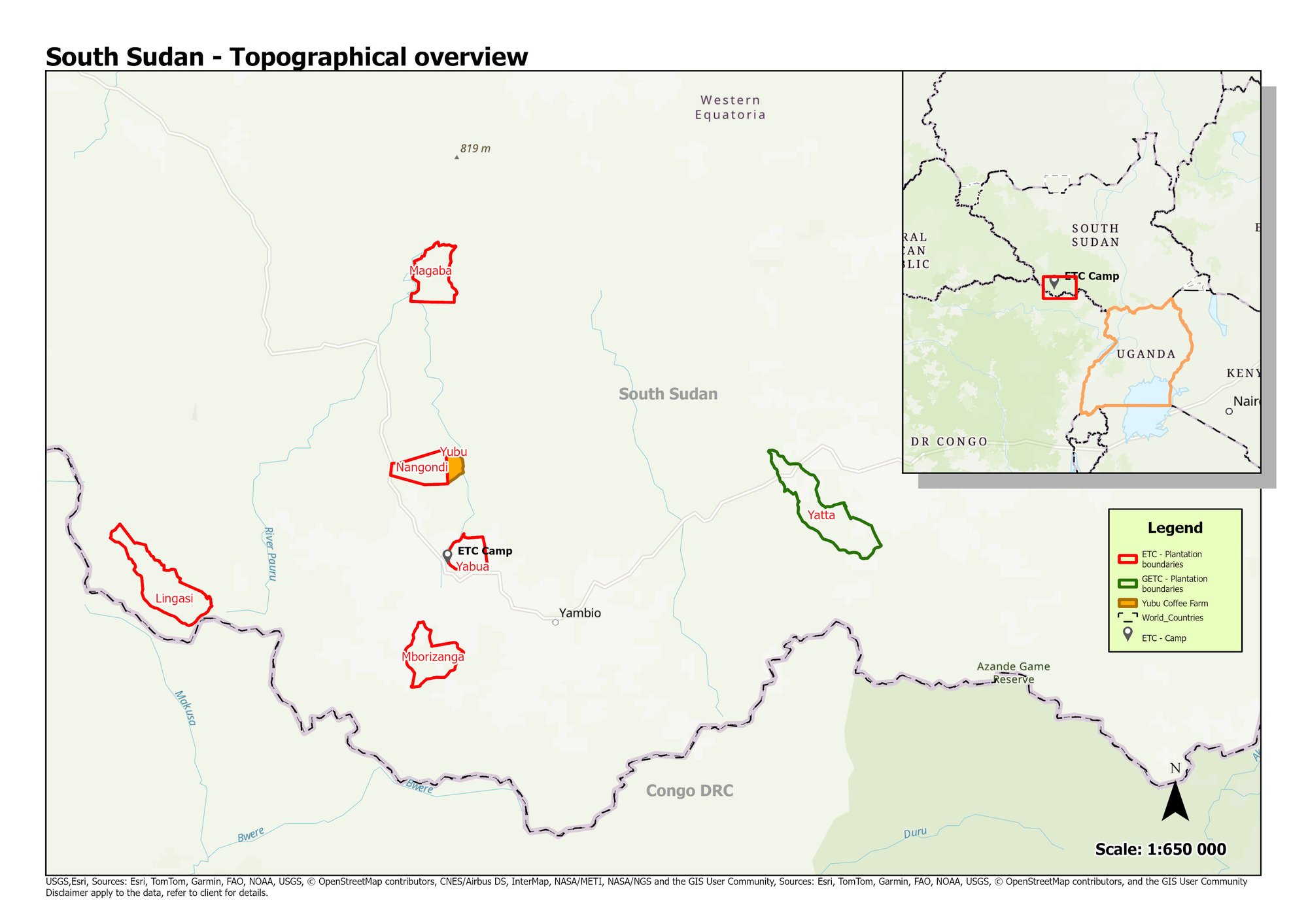
ETC manages five concessions under a 32-year lease from the historic Nzara Agricultural Complex. Its teak was planted between 2007 and 2024, it has a history of teak exports, and runs the “Excelling in Excelsa” coffee model, with its own estate, a network of more than 1,600 outgrowers and commissioned wet and dry mills.

ETC shows what frontier execution looks like in practice: logistics, staffing, stakeholder management and fire prevention in one of the most demanding operating environments in Africa. In an EUDR assessment, 92% of ETC coffee outgrower plots were classified as low-risk.
Visit equatoriateak.com

Map of ETC and GETC concessions in Western Equatoria, South Sudan

ETC concessions, camp HQ and coffee plantation, and the GETC concession, Western Equatoria. Click to enlarge.

18,640
ha of concessions
3,253
ha of teak planted
83
ha of estate coffee
1,600+
coffee outgrowers
1,000+
staff at peak

What’s next

  1. Expand teak from 3,253 ha to 4,000 ha, ready for a sustainable rotational harvest of about 160 ha a year, and strengthen fire and maintenance systems.
  2. Grow estate coffee to 200 ha and outgrower coffee to about 1,980 ha, supported by increased processing throughput, targeting around 800 tonnes a year.
  3. Launch cocoa with a 75 ha estate and a 500 ha outgrower programme, and continue R&D trials at Nangondi (coffee, cocoa, vanilla).
  4. Develop a carbon programme under the VCS AR-ACM0003 pathway.
South SudanOperating51% owned

Green Environ Teak Company

A second teak asset in Maridi County, harvested and replanted, and held on a 60-year lease since 2009.

GETC holds two concessions in the Yata and Embe reserves. Its plantations were harvested between 2016 and 2019 and replanted between 2017 and 2024, completing a full sustainable harvest-and-replant cycle.

GETC is a “repeatable module” for establishing and protecting plantation compartments. It shares procurement, people and systems with ETC, and the reforestation of managed blocks brings clear environmental benefits alongside local employment and contractor demand.

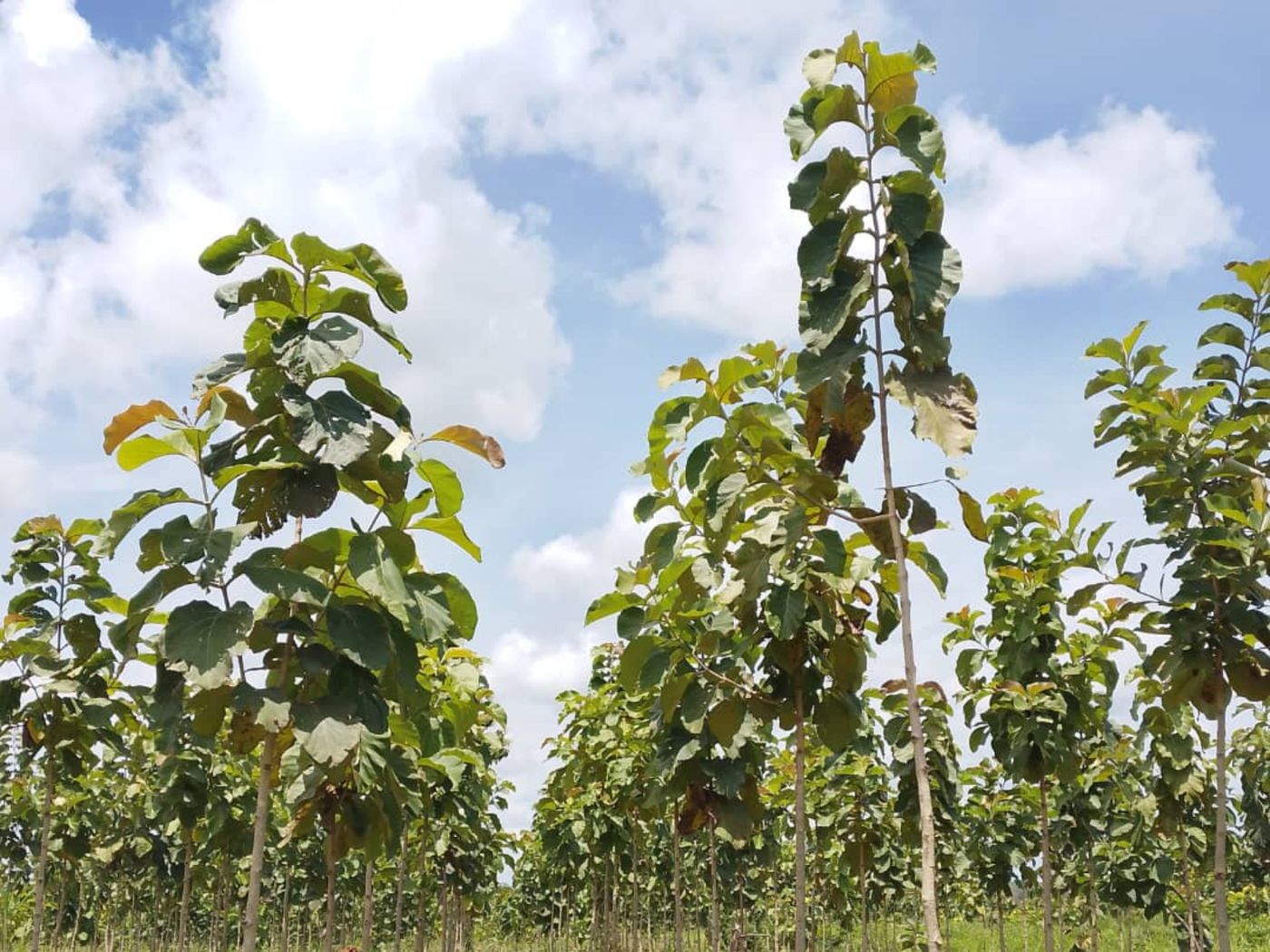
Young replanted teak
5,250
ha of concessions
356
ha of teak planted
2016–19
harvested, then replanted
200+
potential jobs
2069
lease runs to

What’s next

  1. Continue compartment planting and maintenance, and protect standing trees from fire and encroachment.
  2. Assess the feasibility of a carbon pathway.
  3. Integrate planning, logistics and reporting more closely with ETC.
UgandaScaling53% owned

Green Environ Forestry

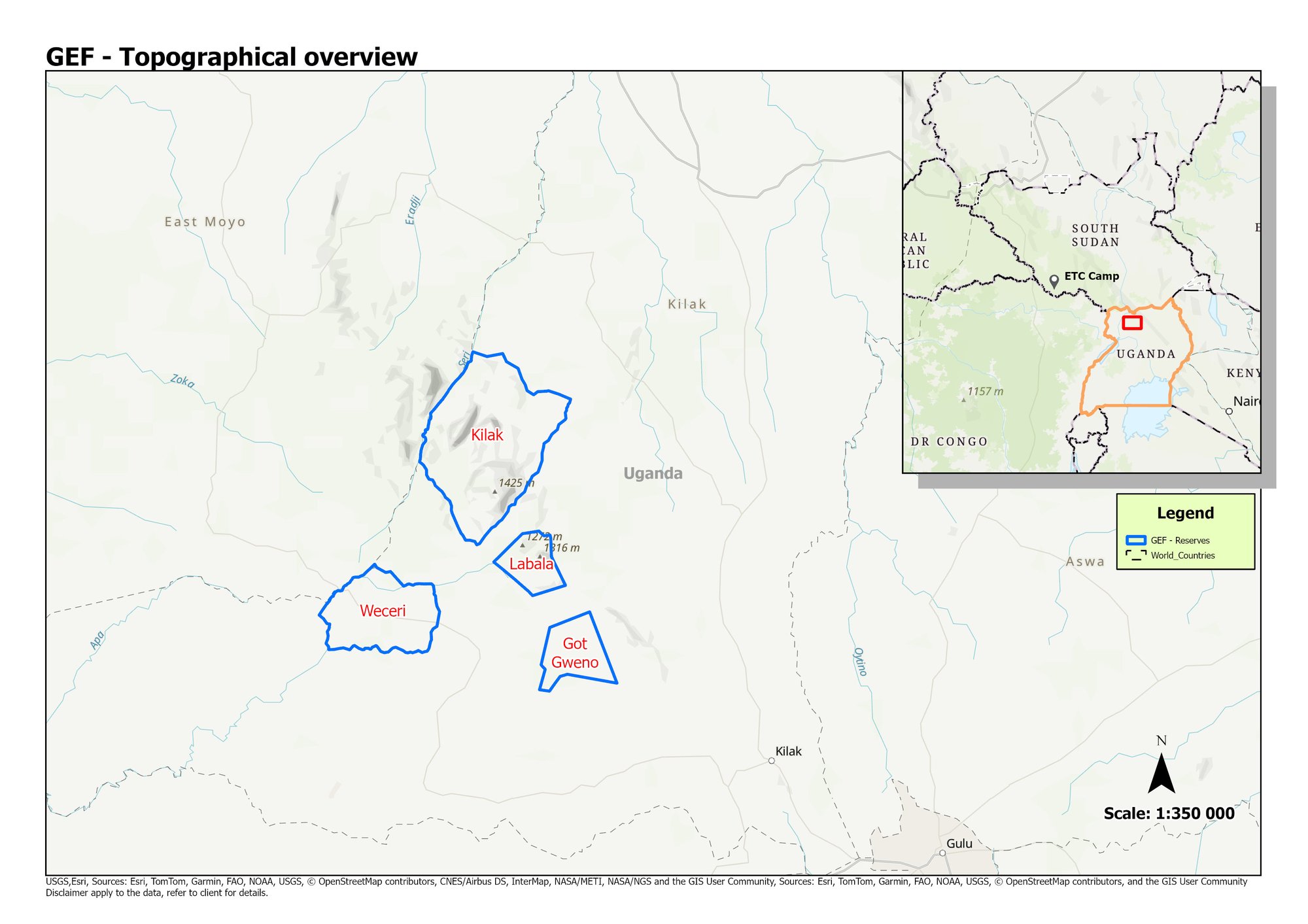
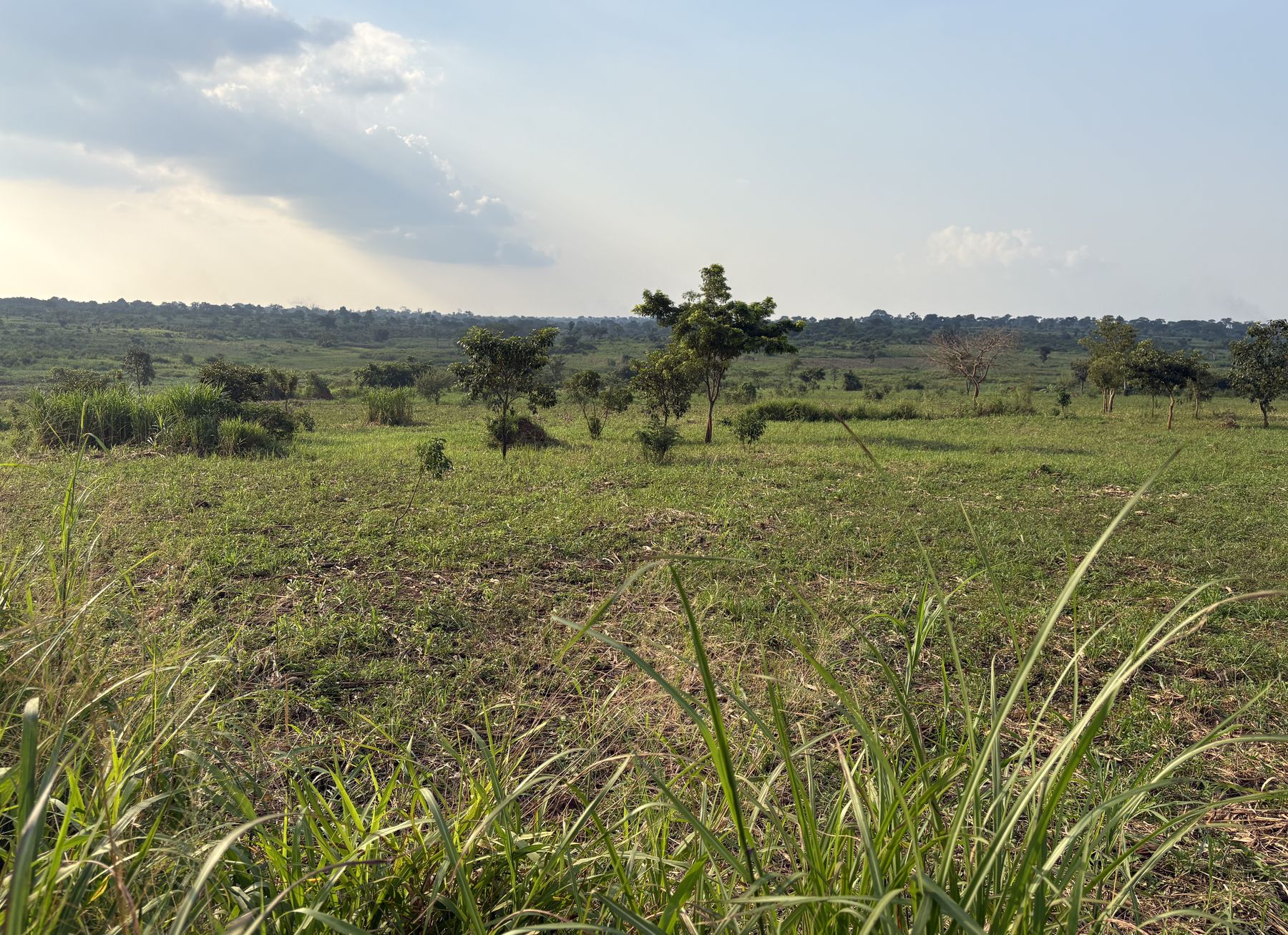
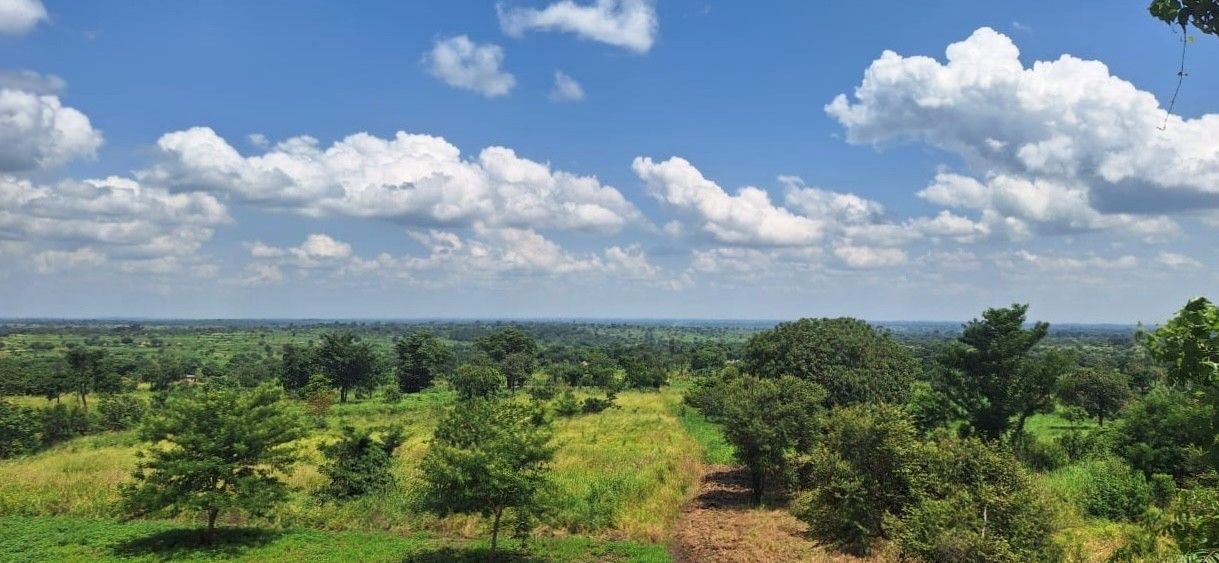
Implementation-ready restoration, teak and coffee across four Central Forest Reserves in the Gulu region.

GEF is EFG’s first large-scale Ugandan project. It holds a long-dated licence from the National Forestry Authority (NFA) and combines commercial teak, indigenous forest restoration and coffee agroforestry in a single landscape mosaic. The project is designed to generate ARR carbon removals under Verra VM0047 and the Climate, Community & Biodiversity (CCB) standards, alongside early agroforestry income.

Pre-feasibility is complete and feasibility work, including social and soil studies, is well advanced. GEF brings the systems proven in South Sudan to a larger land base with a lower risk profile.

Map of the four GEF Central Forest Reserves in northern Uganda

GEF’s four Central Forest Reserves, northern Uganda. Click to enlarge.

20,000
ha project area
5,565
ha teak planned
9,880
ha indigenous restoration
1,050
ha coffee agroforestry
1.4M
tCO₂e modelled over 40 years

What’s next

  1. Finalise the project design document, ESIA and MRV plan, and ramp up nurseries and early procurement.
  2. Carry out community engagement and pilot the agroforestry structure: 350 ha of estate coffee plus 700 ha with outgrowers.
  3. Plant the first blocks in 2026 with fire and monitoring systems. Establish around 1,590 ha of teak by 2031 and 5,565 ha by 2045, and pilot a teak outgrower model to increase planting capacity.
  4. Restore 9,880 ha of indigenous forest (2,679 ha of planting and 7,201 ha of assisted natural regeneration), with first carbon issuance targeted for 2029.

From nursery to harvest, and beyond

See how teak, coffee, cocoa and carbon fit together on the same land.